Utah
Ogden Union Station
2501 Wall St
Ogden, Utah 84401
(801) 393-9890
Ms. Linda Thatcher
Utah State Historical Society
300 Rio Grande
Salt Lake City, UT 84101
(801) 596-1730
OR
Byron Lewis - (801) 782-6210
The whereabouts of artifacts was a mystery until recently. Members of the 40 & 8 society who were restoring the boxcar found several cartons of gifts.
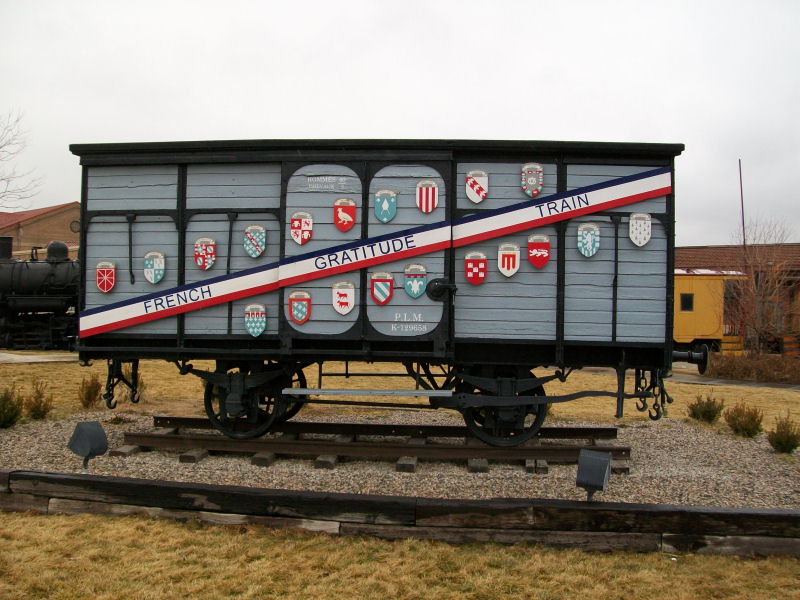
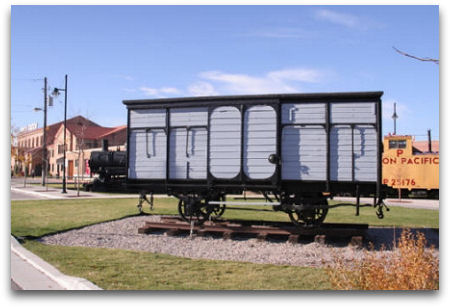
The Utah boxcar had been on display at the Ogden Union Station, but was moved to an out of state location for refurbishment. The car, wonderfully refurbished, is now located at its new permanent home, the Union Pacific Railroad Station Museum in Ogden
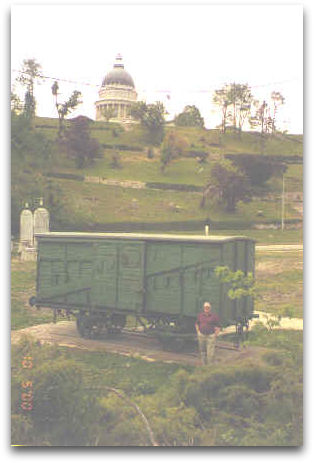
On February 22, 1949, in Salt Lake City a colorful ceremony took place at noon on the corner of Main East and South Temple. A parade left from Salt Lake City Post No. 2 of the AmericanLegion, which was located at 404 S. W. Temple, and continued to the Union Pacific Building. Participating in this exciting occasion were Baker-Merrill American Legion Post Drum and BugleCorps from Ogden; American Legion Posts from Salt Lake City; Ogden’s state and local Lions Club officials; a jeep posse, and members of the greeting committee. H. M. McNeil, who had ridden in the 40 & 8s as a soldier in World War I, was chairman of this committee. The parade, the presence of the many organizations, and the many people present were there to greet the arrival of Utah’sMerci boxcar from France. It had arrived one week late because of the severe weather in the western part or the country.
As with America’s Friendship train, the Merci’s gifts came from the people, not the government. The French people gave whatever they could. The gifts varied from centuries old artworks to a simple handkerchief or a photograph.
Ogden’s citizenry would not be left out of this occasion. Undeterred by heavy fog, a motorcade of approximately 150 people left Ogden at 10:30 a.m. Clinton D. Vernos, AttorneyGeneral, presented the Merci car to Gov. J. Bracken Lee. The Governor headed the list of speakers. Mayors Glade and Peery thanked the crowd, and Mrs. Brock and Mrs Sylvester, recent French brides, speaking in their native language expressed their appreciation for the Americans' generosity.
Spectators were thrilled to see Salt Lake City native Alice Knowlton Hanson participating in the ceremonies. Having moved to France after school in Utah to pursue a singing career, Miss Hanson currently occupies an important position in international relations.
Despite these festivities and as in the case of the Friendship train, most Utah papers refer to the train or the boxcar as a relatively minor occurrence, simply noting that the Magellan had sailed into New York harbor. Consequently, most Utahns seem not have been aware of the arrival of the boxcar.
Among the treasure which the French had given to the people of the Beehive state, was a gift from a family inspired by events of August 22, 1944, the day French and American soldiers liberated Paris. Having almost no materials to work with, a French family took a silk petticoat, dyed it, cut stars and stripes from it, and sewed them on by hand. Two little girls sent another moving gift: an 82-years old doll which they said their mother, grandmother, and great grandmother all had played with. They included the doll’s name, Camillle. Among the other presents were a book of paintings on silk, dolls, wooden shoes, laces, historic souvenirs, and an album of folk song recordings and paintings by French school children. Gov. Lee presented this album to school children.
The Utah Power and Light on Main Street, Salt Lake City displayed the gifts from February 28th to March 4th. Afterward the gifts were to be distributed to communities which had contributed to the Friendship train and to public museums.
Sadly, as is too often the case, the whereabouts of the gifts was a mystery until recently. Members of the 40 & 8 society who were restoring the boxcar found several cartons of gifts.
Dr. Frank H. Jonas, chairman of the United Veterans Council announced the boxcar would be permanently placed in the southeast corner of Memory Park. Many military organizations provided the shelter for the car and guaranteed it would be maintained.
Such was not the case. The car again deteriorated through the following decades. In June 2002 under the leadership of Byron Lewis, grand chef de gare of the Utah 40 & 8, the car was moved to Ogden. The society’s members worked to restore the rotten wood, and painted both the interior and exterior. Tirza Probasco, a professional artist, duplicated all forty of the plaques which represent the French provinces.
The car, wonderfully refurbished, is now located at its new permanent home, the Union Pacific Railroad Station Museum in Ogden. Missing it would be missing a vital part of Utah’s history.
Dorothy R. Scheele